The American AI Festival
For four years, our annual tentpole lived at SXSW. This year, we brought it to Washington.
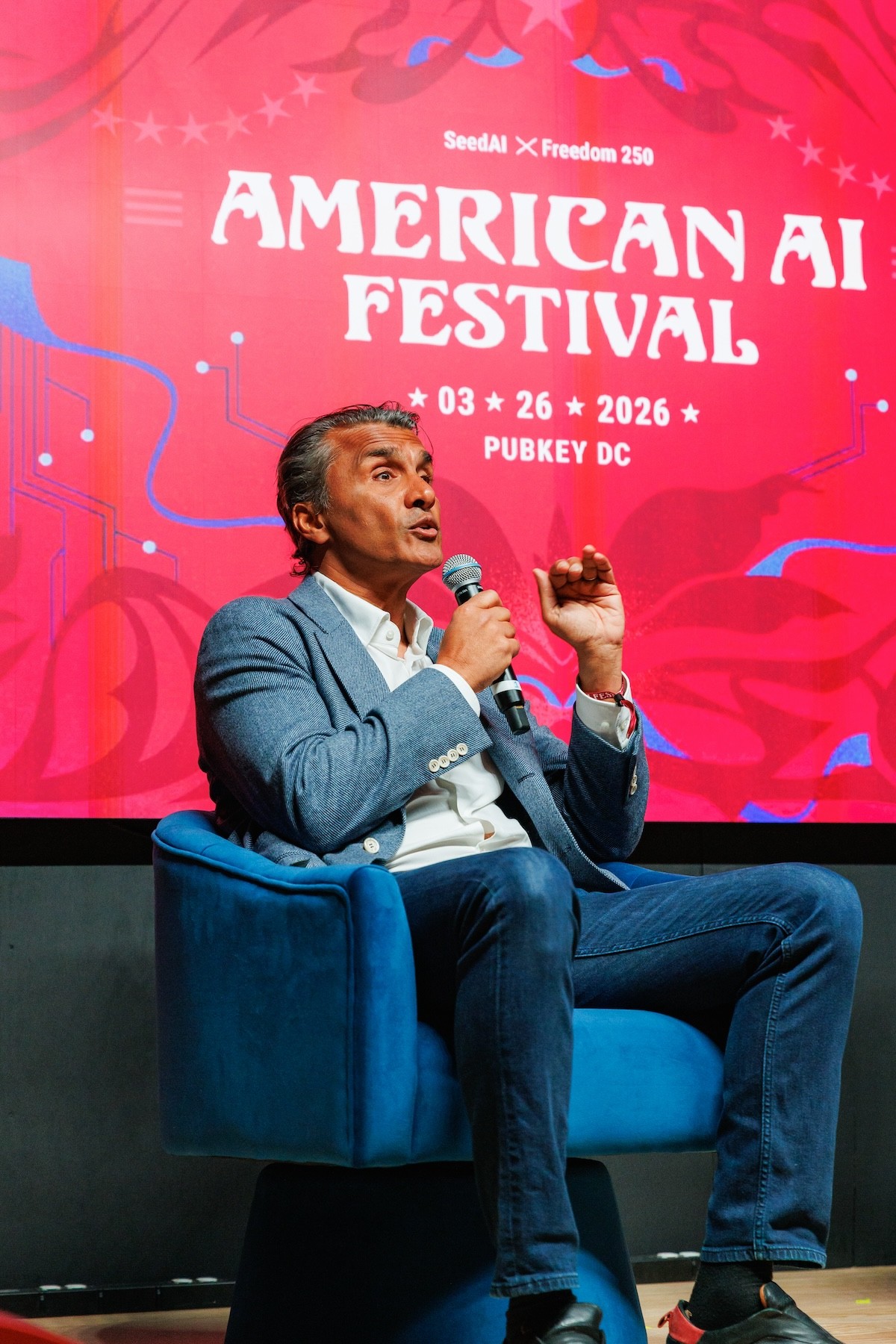
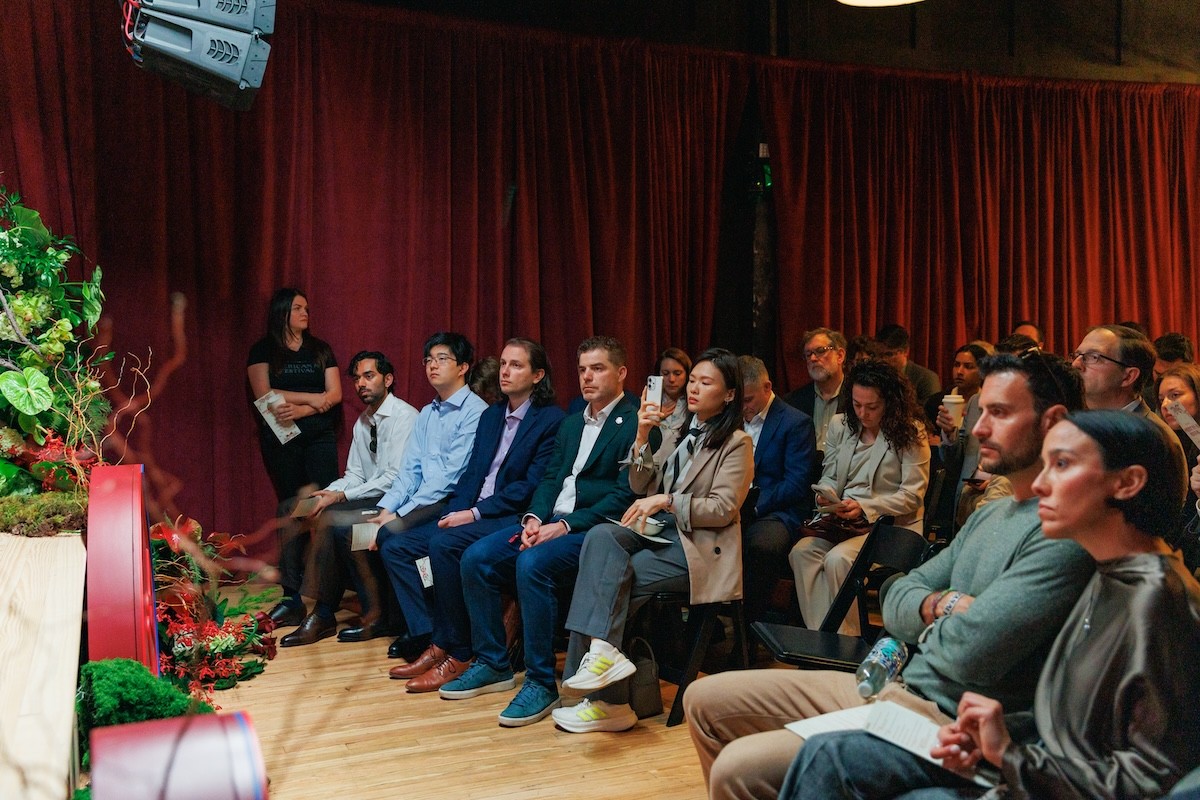
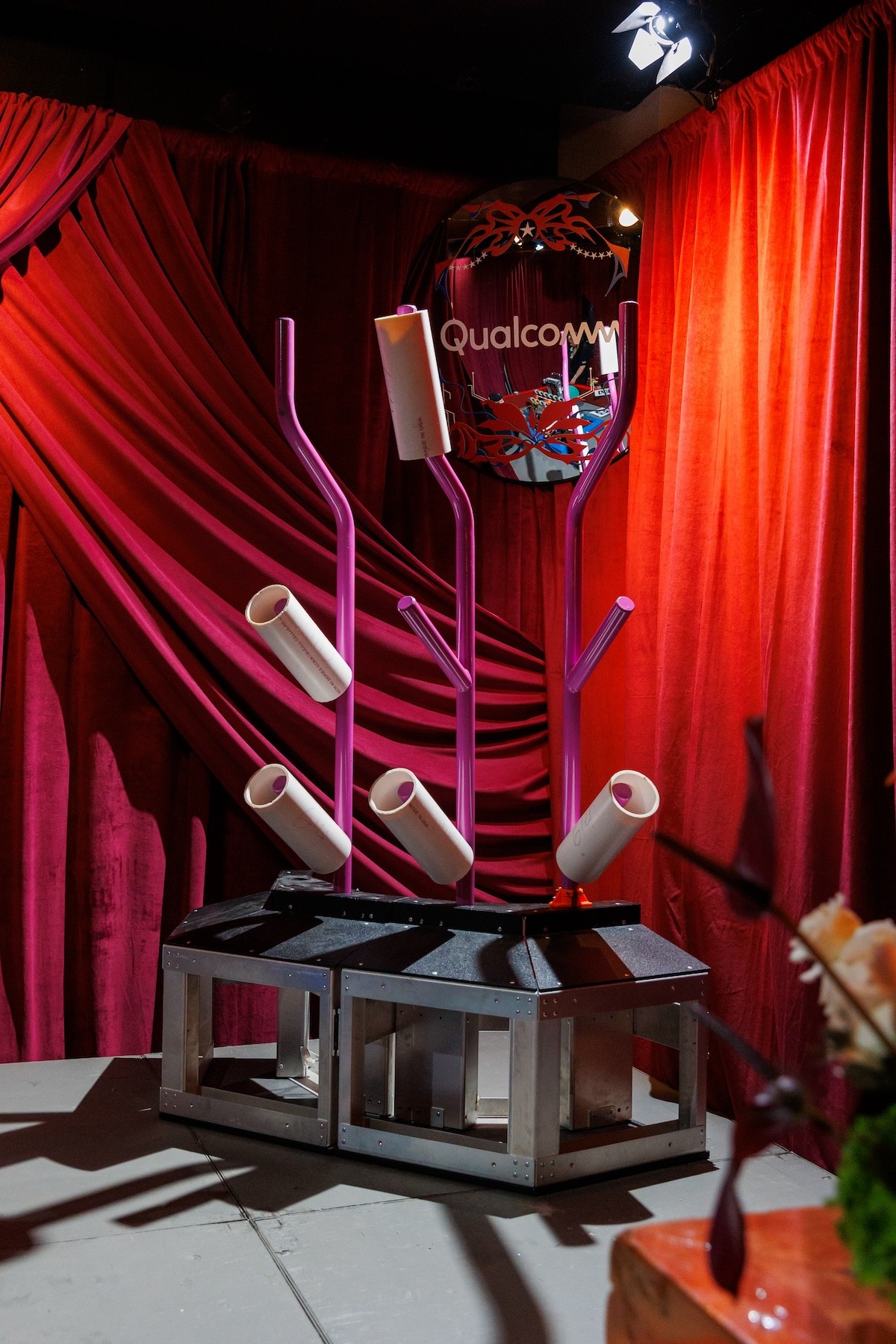
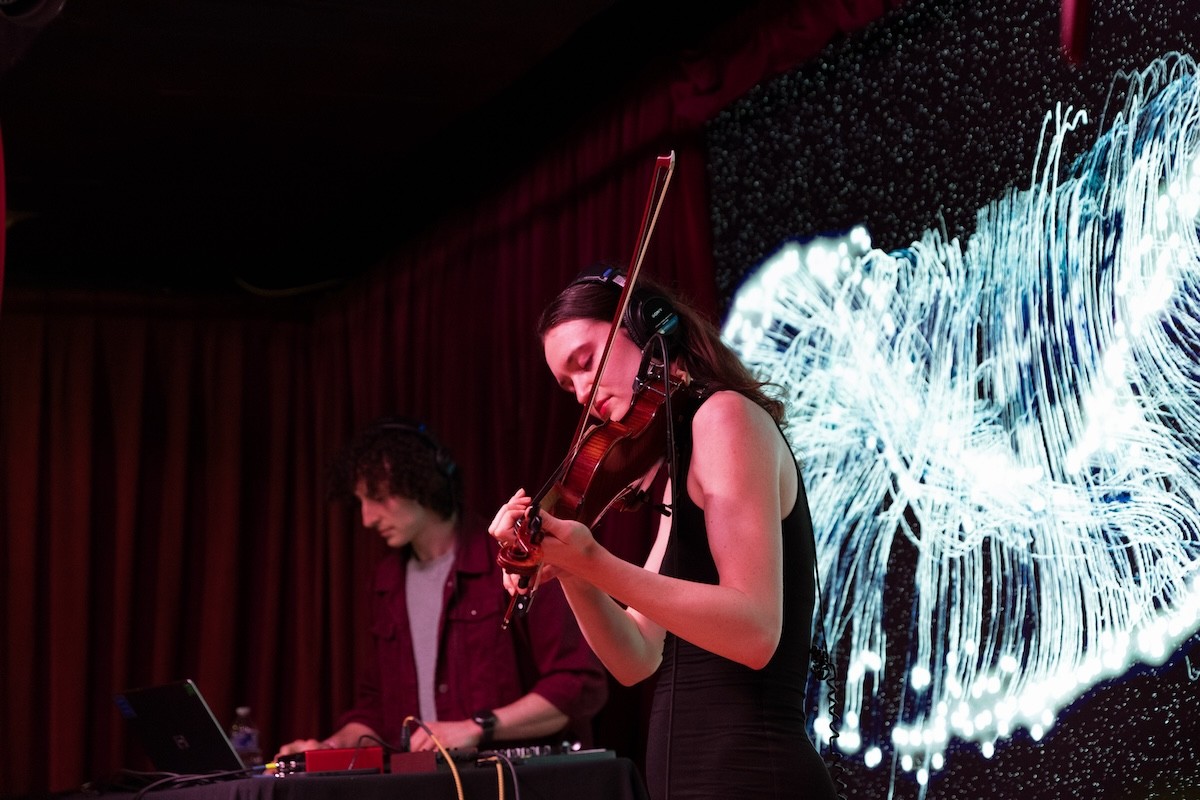
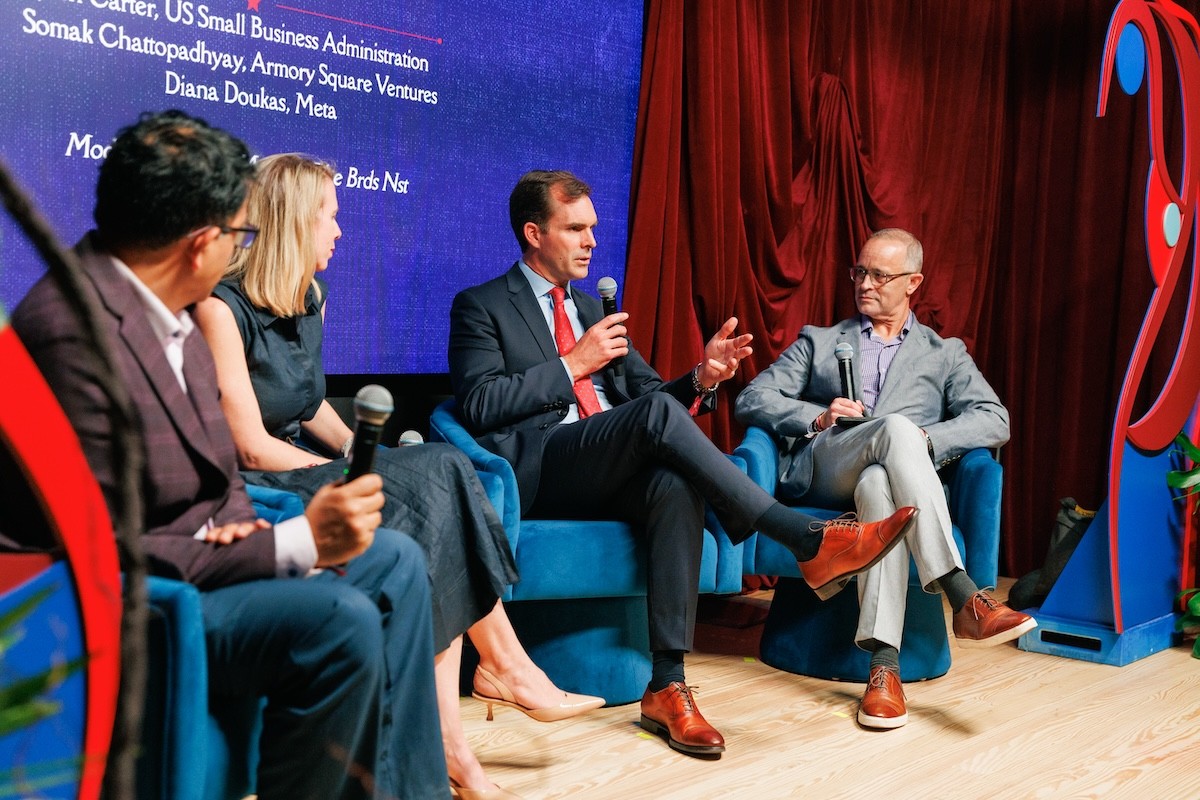
Co-presented with Freedom 250 in honor of America's 250th anniversary, the American AI Festival brought together policymakers, researchers, founders, and industry leaders at Pubkey in DC for a full day of programming on what AI readiness actually looks like across government, science, business, and communities. We were joined by partners including Qualcomm, Meta, NobleReach, Uber, NVIDIA, Anthropic, Atlassian, OpenAI, Dell, Scale, and Ramp.
Here's what the day covered.
Federal Talent and the Workforce Pipeline
OPM Director Scott Kupor brought the numbers on where the federal workforce actually stands: only 7% under the age of 30, fewer than 6% in STEM roles, and time-to-hire still measured in months. He made the case that these workforce gaps are national security problems that have been treated like HR problems, and that OPM needs to function more like a talent acquisition shop. He also bought Tech Force hats out of his own pocket, because "in government, there's no such thing as marketing budgets."
Taylor Stockton from the Department of Labor and Michael Ivey from Arist used the festival to spotlight Make America AI Ready, DOL's flagship AI literacy initiative that had launched just two days earlier. The concept is disarmingly simple: a free AI 101 course delivered entirely over text message. No need to download an app or even own a laptop. You just need ten minutes a day for seven days. The design was built around the reality of the American worker, someone on a bus between shifts who doesn't have two hours to sit through a webinar. Over 10,000 people signed up in the first 24 hours, and the goal is to reach millions. Stockton was clear that the measure of success is whether the program actually reaches people regardless of geography, income, or education level.
Arun Gupta, CEO of NobleReach, pushed back on the idea that young people don't want government work. "This generation arguably cares more than previous generations," he said. "It's just the infrastructure to connect them to these opportunities hasn't been modernized." NobleReach went from 250 applicants for 20 spots to 1,300 for 30. The demand is there. Government is selling 40-year careers to people who are looking for 2-to-3-year experiences, and it hasn't updated the pitch.
Energy, Infrastructure, and the $100 Billion Problem
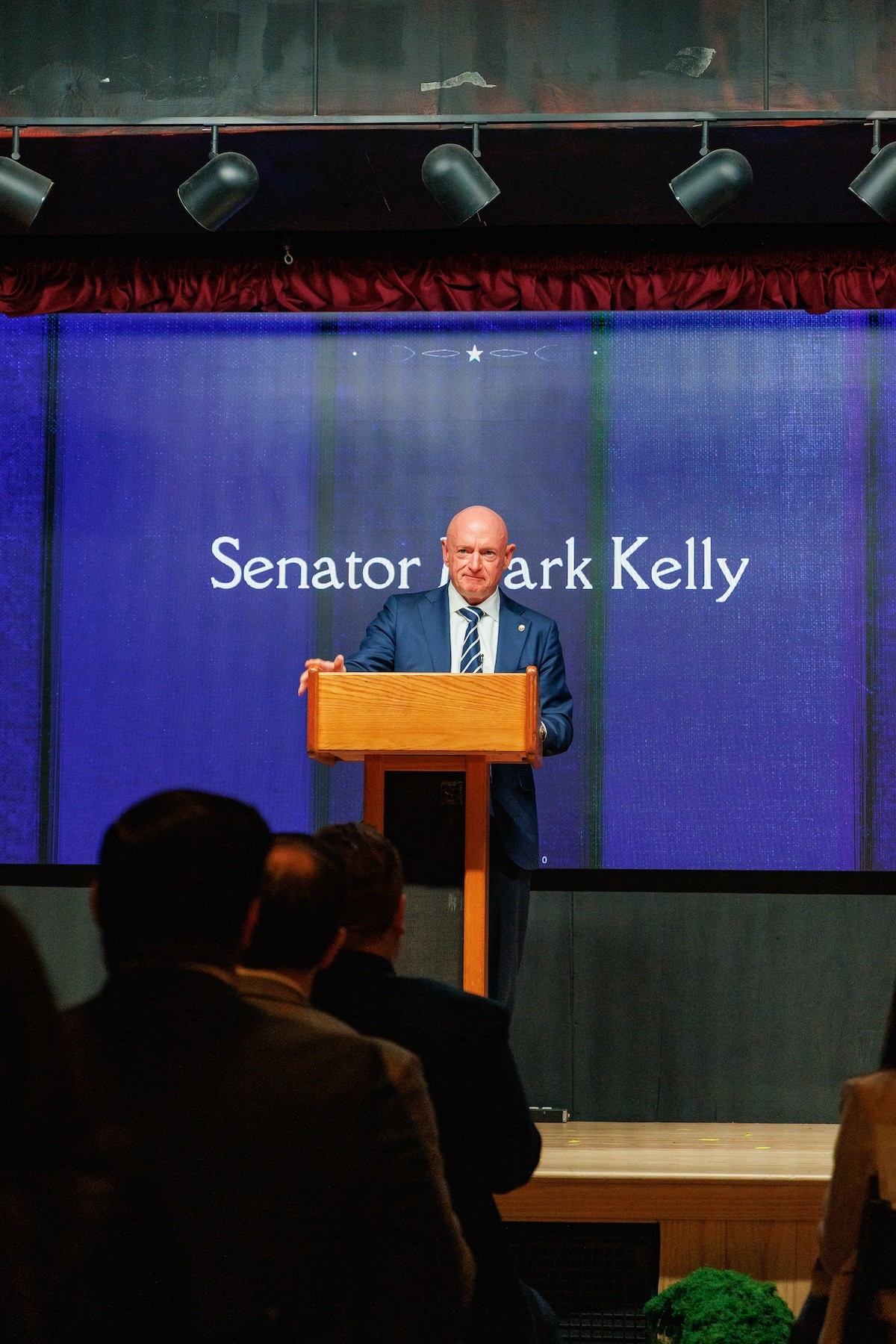
Senator Mark Kelly opened the morning with a clear message: Washington is behind, and the gap between where policy is and where the technology is has real consequences for people. He pointed to over $100 billion in announced data center projects currently stalled by permitting and grid interconnection delays, and framed the infrastructure bottleneck as both an economic competitiveness issue and a kitchen-table concern.
ARPA-E Director Conner Prochaska built on that foundation in his keynote, making the case that growing energy demand is a sign of a healthy economy. "This is a good problem to have." He drew a comparison to Europe, where flat energy demand tracks with economic stagnation, and ran through the numbers on fusion: $8.4 billion in private capital now chasing fusion energy, against the $9 billion total cost of the Manhattan Project in today's dollars. He endorsed nuclear restarts and drew a direct line from scientific computing demand to the gigawatt-scale buildout the country needs. Energy permitting reform has become the bottleneck for American economic growth, full stop.
AI for Science: From Hypothesis to Hardware
If there was a single area where this year's festival went deeper than any previous one, it was the physical infrastructure of science. The labs, instruments, data pipelines, and programs that actually produce the knowledge AI models need.
Sam Rodriques, CEO of FutureHouse, got some of the biggest reactions of the day. His AI scientist, Cosmos, compressed 6.1 months of graduate student research into 4 hours, writing 42,000 lines of code autonomously at about $100 per experiment in compute costs. The results also replicated at 80% accuracy where the original published work had shown only 30% consistency across labs. For anyone tracking what AI can actually do for research right now, this was the number to walk away with.
Michelle Lee, CEO of Medra, tackled the physical side of the same problem. Traditional lab automation has managed to automate about 5% of instruments over 20 years. Medra's physical AI scientist (humanoid robotics applied to lab workflows) hit 65% in three years and is on track for 85%. She announced that Medra will open the largest autonomous lab in the United States in San Francisco later this year. Her framing: "biology superintelligence," and the argument that if you can't generate data at scale in the wet lab, your dry-lab AI hits a ceiling no matter how good the models get.
Erwin Gianchandani, NSF's Assistant Director for the TIP Directorate, connected these individual efforts to national infrastructure. His vision for programmable cloud labs, federated and accessible nationwide, drew a direct parallel to NSF's investment in supercomputing centers in the 1970s and '80s, which became NSFNet, which became the internet. He announced 56 AI Coordination Hubs across every state and territory, modeled on the USDA Cooperative Extension Program. And the NSF Engines numbers were striking: $135 million in federal investment has turned into over $1.5 billion in matching commitments from state and local governments, private sector, and venture capital, touching 20,000 Americans through reskilling programs.
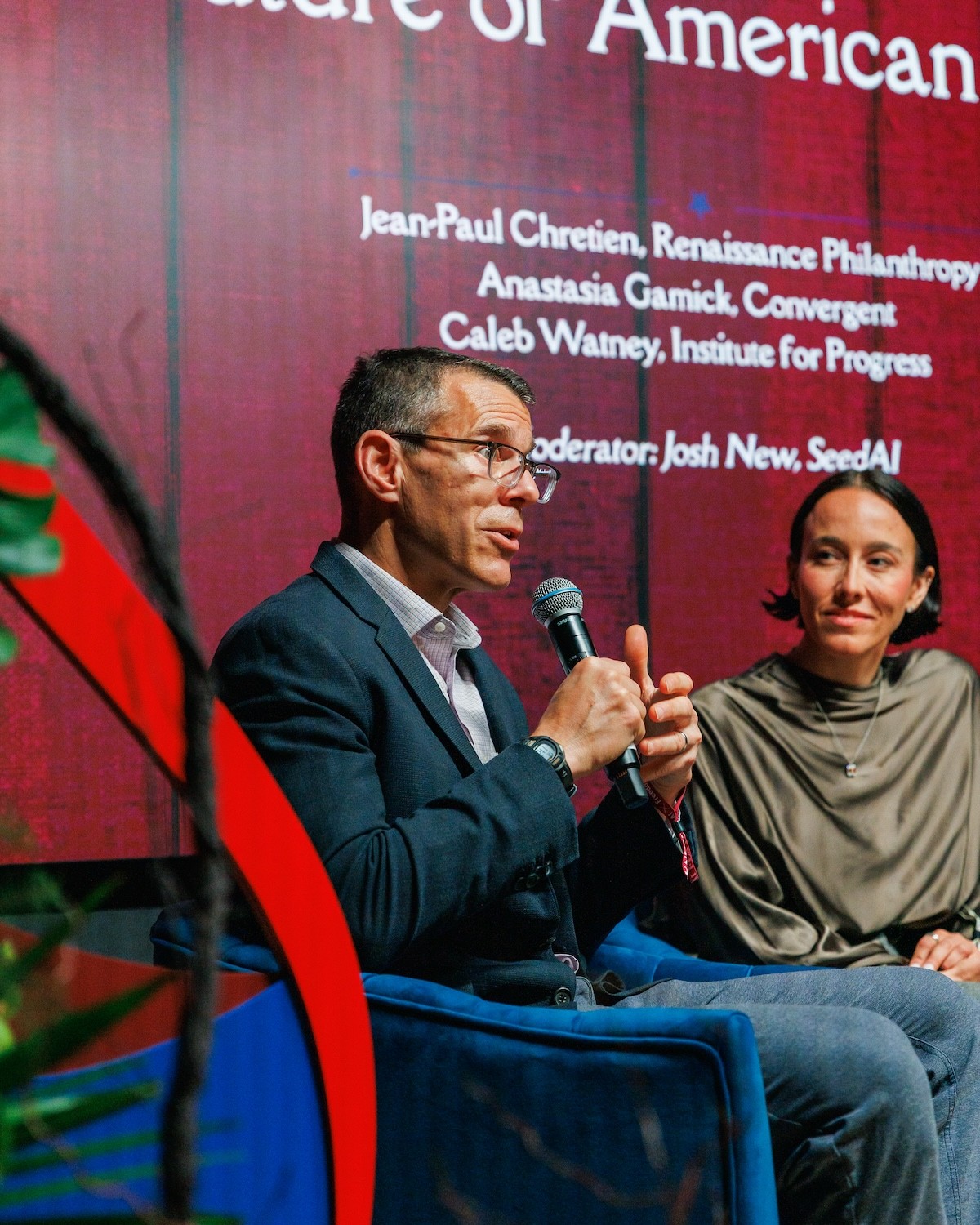
Our Accelerating Scientific Discovery panel brought together Caleb Watney (Institute for Progress), Anastasia Gamick (Convergent Research), and JP Chretien (Renaissance Philanthropy). Watney offered what might have been the day's sharpest analogy: "I sometimes worry that our scientific financial portfolio, so to speak, is like 80% invested in bonds." He also previewed the Atlas of Innovation, an upcoming tool designed to replace what he called the "vibes-based" process by which the federal government currently chooses funding mechanisms.
Gamick made it tangible. Convergent's brain-mapping FRO is using expansion microscopy (literally, "we slice the brain and put in diaper powder") to make light-microscopy brain mapping dramatically cheaper, with downstream applications in consciousness research, reward signal processing, and compute-efficient AI architectures. Chretien argued that the highest-leverage AI-for-science application might not be bench science at all but program management: "mapping a field, understanding bottlenecks, talking to hundreds of scientists, designing a time-bound program. Some of this sounds sort of boring compared to automated labs. But this is the art of DARPA."
Governance That Actually Works
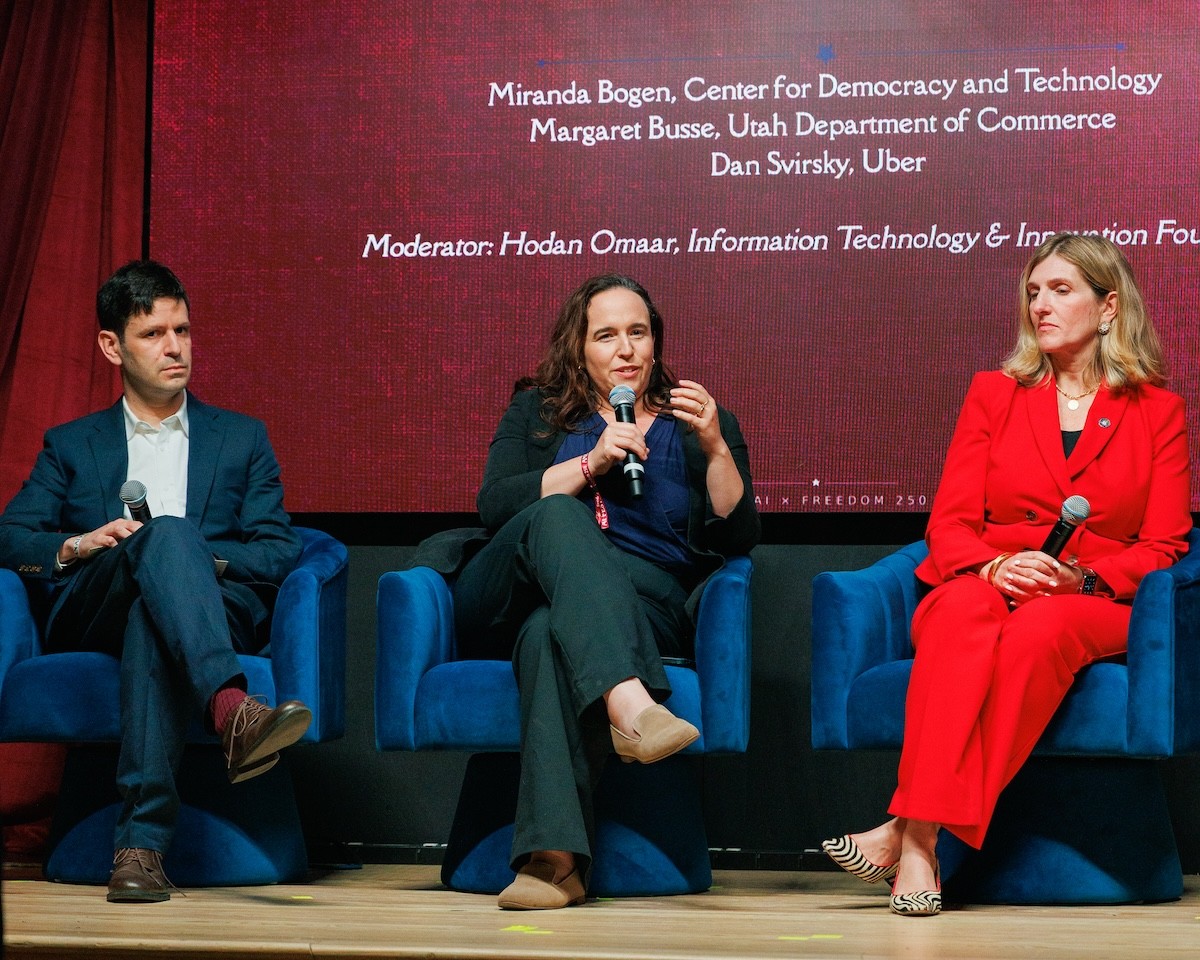
The governance panel featured practitioners doing the work. Dan Svirsky, who runs Uber's Marketplace Fairness Team, walked the room through what algorithmic testing looks like in practice: the "translation problem" (a lived experience becomes rows of data, and things get lost), the "spotlight problem" (what you choose to test reveals your priors), and the grounding principle that "each row of data is something that happened to someone." His ask: safe harbor provisions for companies that test in good faith and act on what they find. Uber's algorithmic transparency report had come out days before the event.
Margaret Busse, who ran Utah's AI regulatory sandbox, offered a proof of concept for structured experimentation as an alternative to top-down rulemaking. Miranda Bogen from the Center for Democracy and Technology reframed governance as market infrastructure: "People who want to procure these AI tools can't do so confidently because they don't know how to manage the risks." The demand for governance is coming from buyers.
Jennifer Pahlka, in a featured conversation, opened with an R.E.M. joke and then delivered a quiet case study in what happens when government institutions can't execute at the speed technology moves. Her Singapore comparison wasn't flattering. Rep. Josh Gottheimer brought the constituent perspective: New Jersey utility bills are up 45% in two years, and his voters want to know what data centers are going to do to their rates. "Plus we gotta kick China's ass on this."
The AI Capabilities Conversation
Sarah Heck from Anthropic delivered two talks in one. The first was a cybersecurity case study: Claude discovered two previously unknown zero-day vulnerabilities in Firefox, not by being directed to look for them but as a natural output of its analytical capabilities. The vulnerability-discovery market currently depends on a tiny pool of elite human researchers, and AI is about to massively increase the supply side of that market. The implications for both offense and defense are significant.
The second half was about what happens when AI becomes organizational infrastructure. She described Anthropic's own operations as "Claudes all the way down," with Claude instances managing, checking, and extending other Claude instances at every level of the company. That picture of a near-term future where AI is a layer you build on, not a tool you pick up, reframed the adoption conversation for a lot of people in the room.
Business Reality
Ara Kharazian from Ramp brought enterprise AI spend data drawn from actual purchasing behavior across tens of thousands of companies, which tells a different story than survey-based estimates of what businesses are doing with AI. Aaron Kleiner from Atlassian was candid: across 300,000+ enterprise customers, productivity gains from AI in collaboration and knowledge management sit at about 10%, and "I don't think that's because AI can't help us more. I think it's because we need to be more open to using it." Howie Choset from CMU dropped a stat that stuck: the number of American-owned robot manufacturers is functionally zero.
What Comes Next
We built SeedAI to be the connective tissue between the people who need to be in conversation about AI, across policy, science, industry, and communities nationwide. The American AI Festival was our attempt to put all of those conversations in one room for a day, in the nation's capital, during America's 250th year. Based on what we heard from the stage and in the conversations that followed, we think the bet paid off.
Thanks to our team (Anna, Josh, Stuart, Marina) who made this thing work. And thanks to everyone who showed up, stayed late, and made the reception the part where the real conversations happened.
We'll see you next time.The full day of talks, panels, and firesides is available to watch here.